

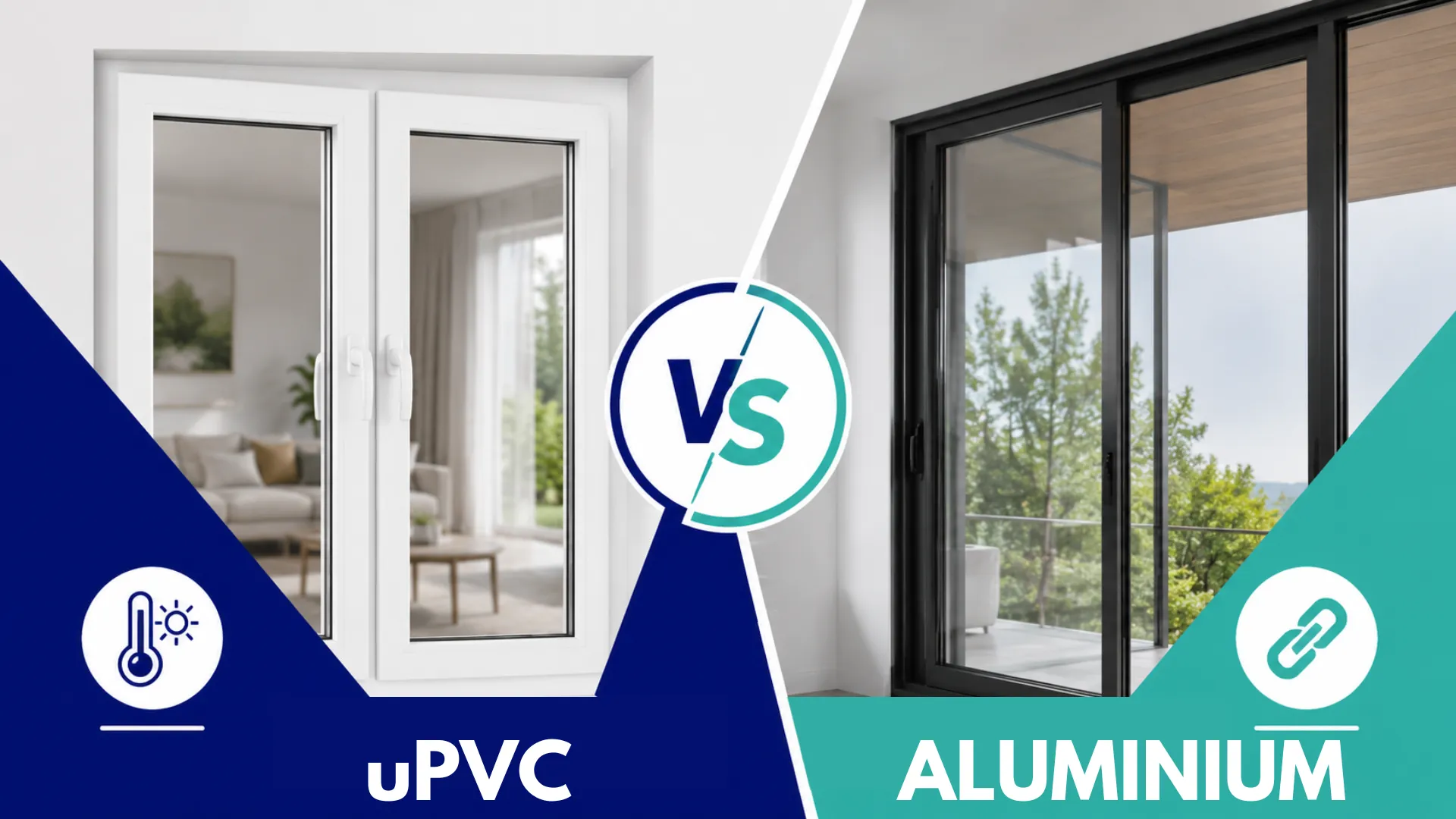
Here is a fact that surprises most homeowners. A bad window choice can raise your electricity bill by almost 25%. That's real money, every single month, just because of one wrong decision at the time of construction.
Doors and windows are not just holes in a wall. They control heat, noise, dust, and even your monthly power bill. Two materials rule the Indian and global market today: PVC (uPVC) and Aluminiums. Both look modern. Both promise durability. But they behave very differently once the sun, rain, or cold season hits them.
This guide breaks down PVC doors and windows vs aluminium doors and windows in plain words. No confusing jargon. Just facts, numbers, and a clear answer at the end.
What Is a PVC Door and Window
PVC stands for Polyvinyl Chloride. In construction, it is called uPVC, which means unplasticized PVC. It is a strong plastic profile, hollow from inside, filled with air chambers. These chambers act like insulation layers. That is why uPVC windows keep rooms cooler in summer and warmer in winter.
uPVC frames come in white, wood-finish, and grey shades mostly. They are common in flats, villas, and hospitals now because of low maintenance.
What Is an Aluminium Door and Window
Aluminium doors and windows are made from a lightweight metal profile. Builders have used aluminium since the 1960s. It is strong, thin, and can hold large glass panels without bending. That's why you see aluminium mostly in offices, shopping malls, and high-rise buildings with big glass facades.
Aluminium conducts heat and cold fast. So without a thermal break design, it can feel hot or cold to touch depending on the weather outside.
Key Differences Between PVC and Aluminium Windows
| Feature | PVC (uPVC) | Aluminium |
|---|---|---|
| Material weight | Light | Very light and thin |
| Heat insulation | Excellent | Poor to average |
| Sound insulation | Excellent | Average |
| Strength for large glass | Moderate | Very high |
| Rust or corrosion | Never rusts | Can corrode near sea coast |
| Color options | Limited | Wide range, custom shades |
| Lifespan | 25–30 years | 20–25 years |
| Best look | Modern, clean | Sleek, minimal, industrial |
This table alone answers half the confusion. If insulation matters more to you, PVC wins. If design freedom and slim frames matter more, aluminium wins.
Read also: How to Choose the Right Glass for Your Windows
Advantages of PVC Doors and Windows
PVC windows keep your home quiet. Traffic noise, construction noise, neighbour's loud TV — a good uPVC window can cut outside noise by up to 70%. This is huge for people living near main roads.
They also save power. The trapped air inside PVC chambers stops heat transfer. Your AC and heater both work less. Over five years, this saving covers a good part of the window cost.
PVC never rusts, never peels, never needs paint. A simple wet cloth wipe every few weeks keeps it looking new for decades. Termites, moisture, and salty air near the coast do not damage it either.
Disadvantages of PVC Doors and Windows
PVC is not as strong as aluminium for very large window panels. If you want a full glass wall, PVC frames may need extra support, which adds bulk and reduces the sleek look.
Cheap or low-grade uPVC can turn slightly yellow under years of direct harsh sun, especially in very hot regions like Rajasthan or Gujarat. Always ask for UV-stabilised profiles to avoid this.
PVC also cannot be repaired easily if damaged. A cracked frame usually means full replacement of that section.
Advantages of Aluminium Doors and Windows
Aluminium is incredibly strong for its weight. Architects love it for big glass doors, sliding windows, and full-height glass walls in modern homes and offices.
It holds its shape for decades without warping, even under heavy weather stress. Aluminium frames also look thin and elegant, giving more glass area and more natural light inside a room.
It is fully recyclable too, which makes it a slightly greener choice from a manufacturing point of view.
Disadvantages of Aluminium Doors and Windows
The biggest problem with regular aluminium is heat and cold transfer. In Delhi's peak summer or Shimla's winter, a basic aluminium frame will feel like touching metal outside — because it behaves the same way indoors near the frame edges.
It also picks up outside noise more than uPVC. And near coastal cities like Mumbai, Chennai, or Goa, salty air can corrode cheap aluminium over the years if it's not powder-coated properly.
Condensation is another issue. On cold mornings, water droplets often form on aluminium frames, which can lead to mould around the window edges over time.
Where Each One Fits Best
PVC windows work best for residential bedrooms, hospitals, schools, and homes near busy roads or airports where sound control matters most. They also suit extreme climate zones — very hot cities and very cold hill regions — because of their strong insulation.
.webp)
Aluminium works best for commercial buildings, large balconies, sliding doors, and modern homes wanting a glass-heavy, minimal look. It also suits moderate climate cities where extreme heat or cold is not a daily struggle.
Cost Analysis: PVC vs Aluminium
| Cost Factor | PVC (uPVC) | Aluminium |
|---|---|---|
| Initial price per sq. ft | ₹450 – ₹750 | ₹350 – ₹600 |
| Installation cost | Slightly higher | Standard |
| Maintenance cost yearly | Very low | Low to moderate |
| Power bill saving | High | Low to moderate |
| Long-term value (10 yrs) | Higher | Moderate |
Aluminium looks cheaper on day one. But once you add power savings and near-zero maintenance, PVC often becomes the smarter long-term buy, especially in extreme weather cities.
Effect of Weather and Climate Region
This is the part most people skip, and it's the most important one.
Hot and dry regions (Rajasthan, Gujarat, parts of Delhi-NCR): PVC performs much better here. It blocks heat and keeps rooms cool. Aluminium heats up fast and can make rooms feel warmer near the window.
Cold hill regions (Shimla, Manali, Kashmir, Ladakh): PVC again leads. Its insulation stops cold air from entering. Aluminium frames without a thermal break feel freezing to touch and let cold seep in.
Coastal and humid regions (Mumbai, Chennai, Goa, Kerala): PVC handles salty air and moisture without any corrosion. Aluminium needs high-quality powder coating here, or it will corrode within a few years.
Normal or moderate climate cities (Bangalore, Pune, parts of Hyderabad): Both materials perform decently. Here, the choice depends more on budget and design taste than weather performance.
| Climate Type | Better Choice | Why |
|---|---|---|
| Hot & dry | PVC | Blocks heat, no yellowing if UV-treated |
| Cold hill areas | PVC | Strong insulation, no cold transfer |
| Coastal/humid | PVC | Zero corrosion, handles salty air |
| Normal/moderate | Aluminium or PVC | Both work well |
Maintenance Guide
PVC needs almost no effort. Wipe with mild soap water every month. Check the rubber seals once a year. That's it.
Aluminium needs a bit more care. Clean the frame regularly to remove dust and salt deposits. In coastal areas, inspect for corrosion spots every six months. Lubricate hinges and sliding tracks twice a year to keep movement smooth.
Final Verdict: Which One Should You Choose
Based on insulation, noise control, weather resistance, and long-term cost, here is a simple rating out of 10, based on common industry reviews and real usage data across Indian climate zones.
| Parameter | PVC Rating | Aluminium Rating |
|---|---|---|
| Heat insulation | 9/10 | 5/10 |
| Sound insulation | 9/10 | 6/10 |
| Strength for big glass | 6/10 | 9/10 |
| Weather resistance | 9/10 | 7/10 |
| Maintenance ease | 9/10 | 7/10 |
| Design flexibility | 6/10 | 9/10 |
| Overall Rating | 8.3/10 | 7.2/10 |
If you live in a hot city, a cold hill town, or near the coast, go with PVC (uPVC) doors and windows. They win on insulation, weather resistance, and low upkeep, which matters more over 20 years than the slightly higher upfront cost.
If you have a modern home or office needing large glass walls, big sliding doors, or a sleek minimal look, and you live in a normal climate city, aluminium is a strong and stylish choice.
For most Indian homes across varied climates, PVC comes out slightly ahead on the overall scale — 8.3 out of 10 versus aluminium's 7.2 out of 10. But the right pick always depends on your local weather, your budget, and the exact look you want for your home.