

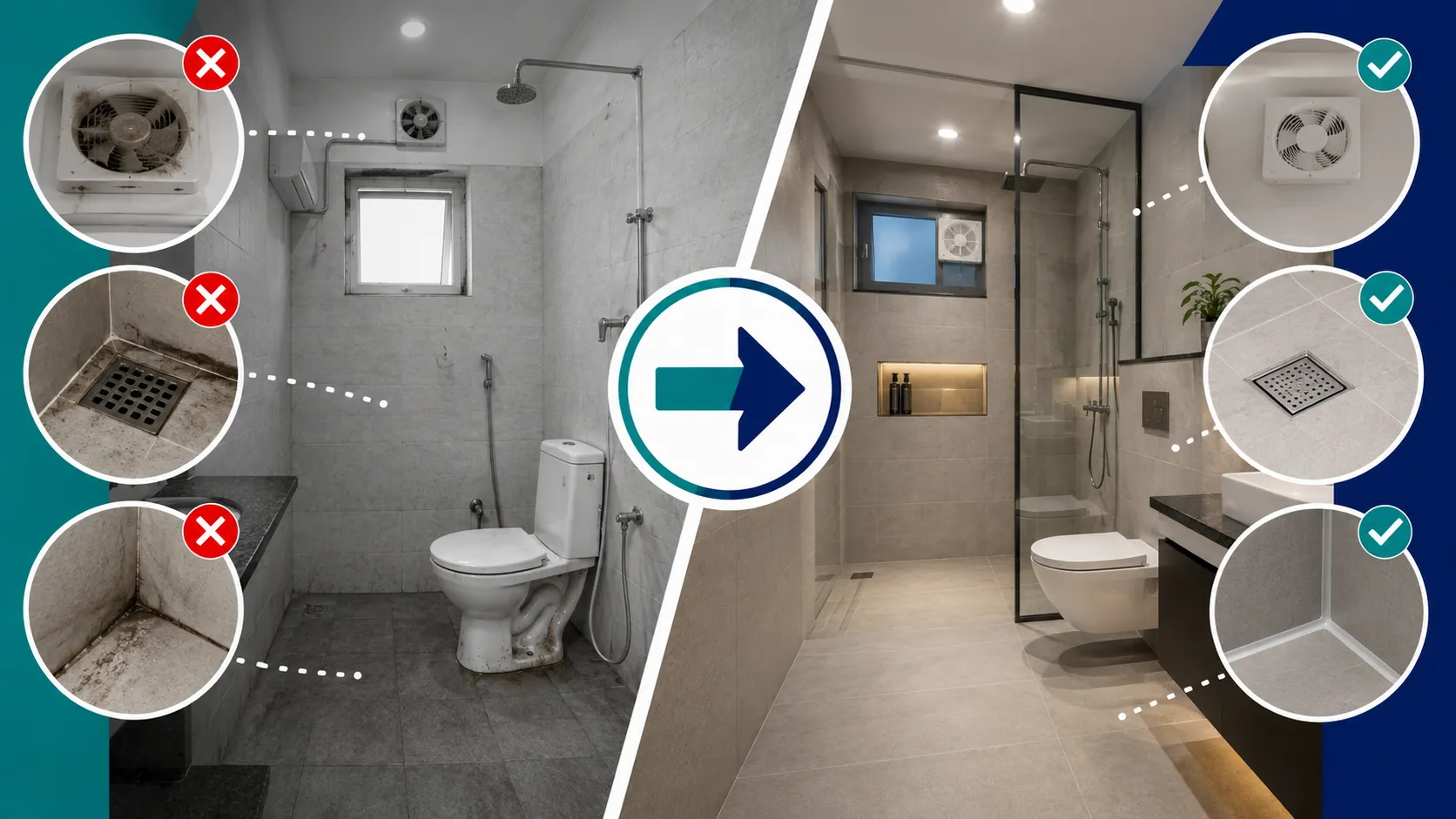
Common Bathroom Construction Mistakes and How to Avoid Them
Here is something most homeowners learn the hard way. Over 60% of bathroom repair calls happen because of mistakes made during the very first construction, not because of old age or wear. A wrong slope, a cheap pipe, or a skipped waterproofing step today can turn into a leaking ceiling two floors below, years later.
A bathroom looks like a small room. But it carries more plumbing, more moisture, and more daily wear than any other room in the house. One small mistake here does not stay small. It grows into damp walls, bad smell, cracked tiles, and repair bills that cost far more than doing it right the first time.
This guide covers the real mistakes builders and homeowners make during bathroom construction, along with simple fixes, so you can catch these problems before the tiles go up, not after.
Mistake 1: Skipping or Rushing Waterproofing
This is the number one mistake, by far. Many builders apply a thin waterproofing coat just to finish the job fast. Waterproofing needs proper layers, proper curing time, and it must go at least 2 feet up the walls, not just the floor.
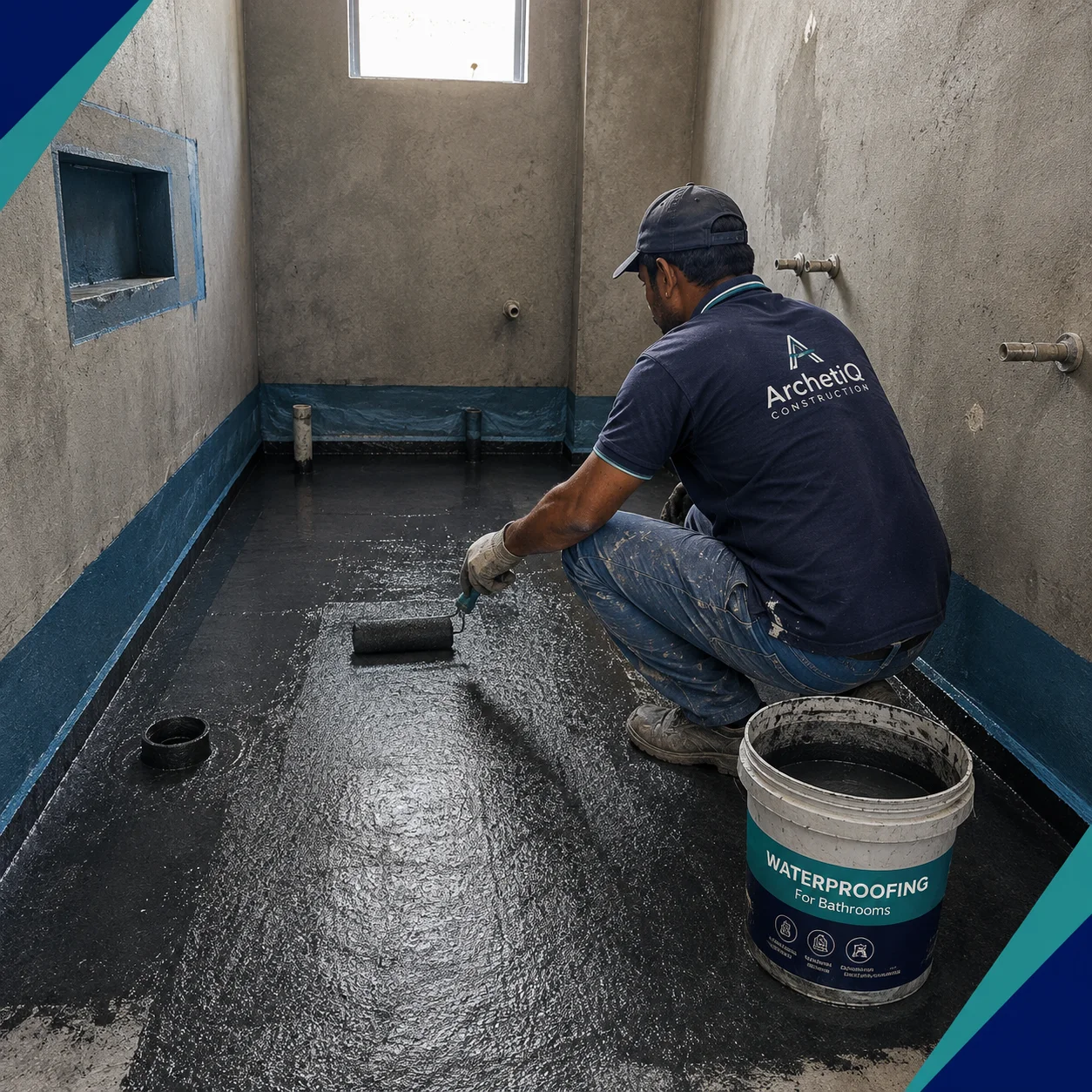
The fix: Always ask for a minimum of two coats of waterproofing membrane, with a flood test done before tiling starts. A flood test means filling the bathroom floor with water for 24 to 48 hours to check for any leakage. Builders often skip this step because it delays the timeline. Don't let them skip it.
Mistake 2: Wrong Floor Slopes
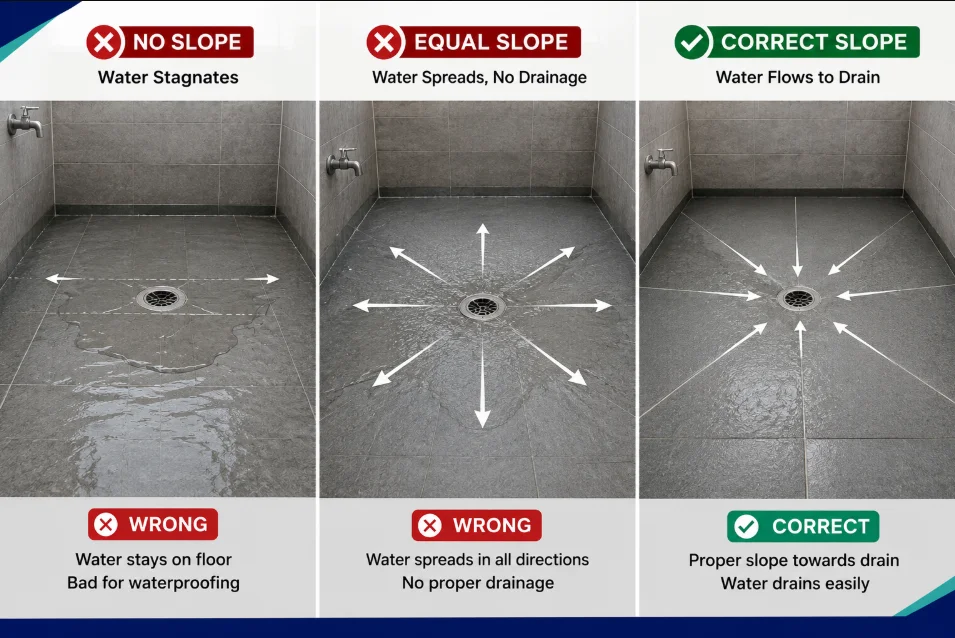
Bathroom floors need a gentle slope toward the drain, usually 1 to 2 percent. Without this slope, water pools near the corners instead of draining out. Over time, this standing water seeps into grout lines and weakens the tile bed underneath.
The fix: Check the slope before tiling by pouring a bucket of water on the base floor. Water should move toward the drain within a few seconds, with no dry patches or puddles forming anywhere.
Mistake 3: Poor Ventilation Planning
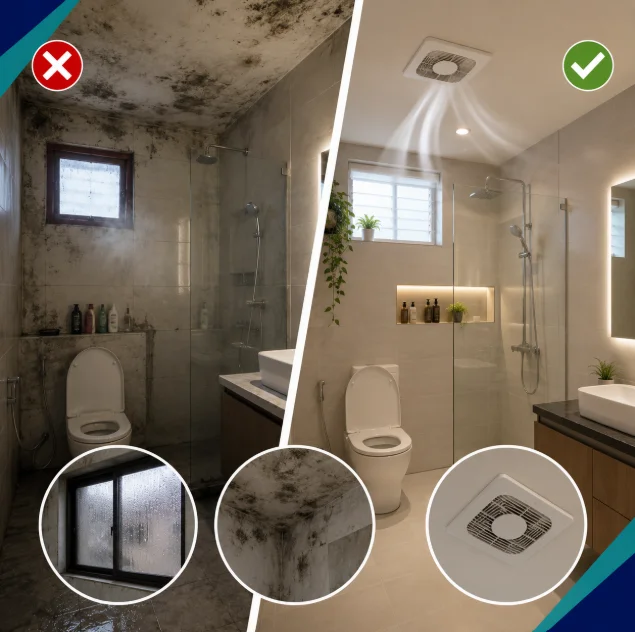
A bathroom without proper ventilation traps moisture inside. This moisture leads to mould, bad odour, and peeling paint on the ceiling. Many homes only get a small window or no exhaust fan at all, especially in inner bathrooms without an outer wall.
The fix: Install an exhaust fan rated for the room size, and vent it outside the building, not into the attic or a closed shaft. If the bathroom has no outer wall, plan a ducted exhaust system during the construction phase itself. Adding it later means breaking tiles and walls.
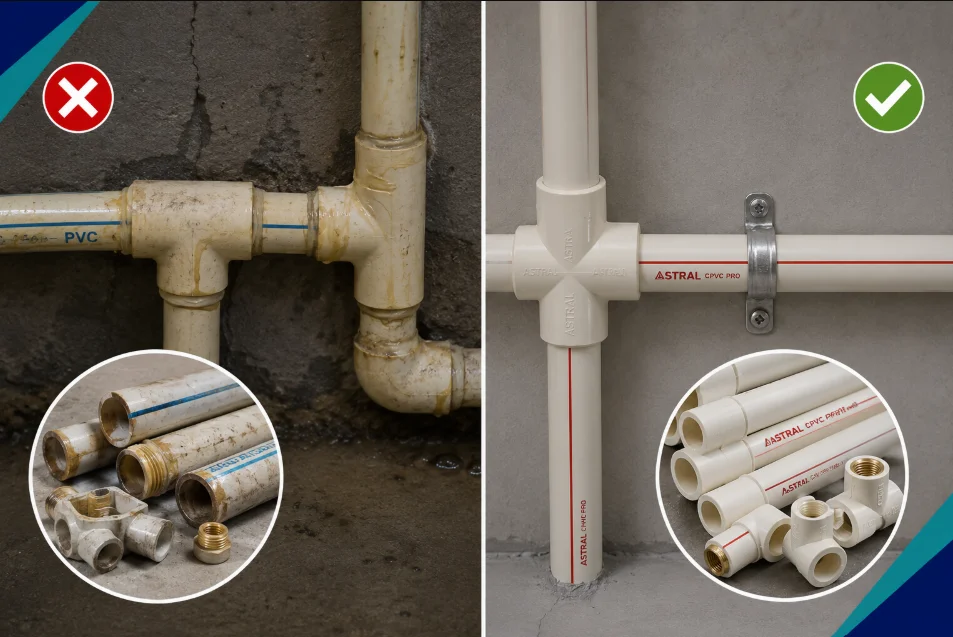
Mistake 4: Using Low-Grade Pipes and Fittings
Cheap PVC pipes and fittings save money on day one but crack, leak, or corrode within a few years. This is one of the most common regrets homeowners share after two or three years of use.
The fix: Use CPVC or UPVC pipes from known brands for hot and cold water lines. For drainage, use ISI-marked pipes with proper joint sealing. Spending a little more here saves a lot of wall-breaking work later.
Mistake 5: Wrong Placement of Electrical Points
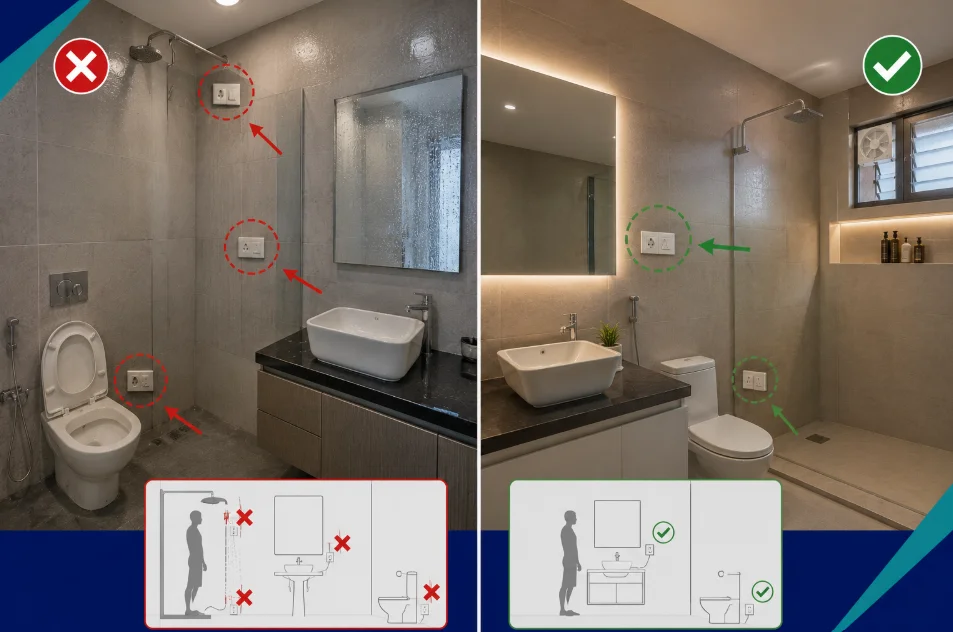
Bathrooms are wet spaces, yet many homes still get switchboards placed too close to the shower area or wash basin splash zone. This is a serious safety risk, not just a construction flaw.
The fix: Keep all switches and sockets at least 3 feet away from any water source, and use waterproof, splash-proof covers. Geyser points should be on a separate circuit with proper earthing.
Mistake 6: Ignoring Pipe Concealment and Access Panels
Many bathrooms hide all pipes completely inside walls with zero access. This looks clean at first, but the day a pipe leaks or a valve needs repair, workers have to break open the wall.
The fix: Always leave a small access panel behind the wash basin or near the flush tank area. It costs almost nothing during construction and saves major repair damage later.
Mistake 7: Wrong Tile Selection
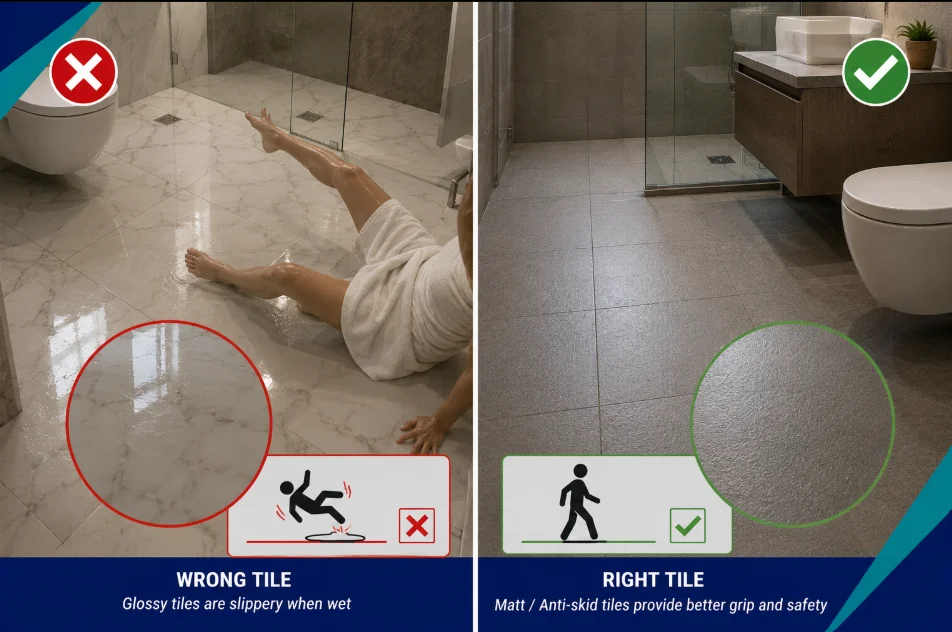
Glossy, polished tiles look premium in the showroom but turn dangerously slippery once wet. Many falls and injuries at home happen in bathrooms because of this one choice.
The fix: Choose matte or anti-skid tiles for the floor, especially in the shower area. Glossy tiles can still be used on walls, where slipperiness does not matter.
Mistake 8: Poor Grout and Joint Sealing
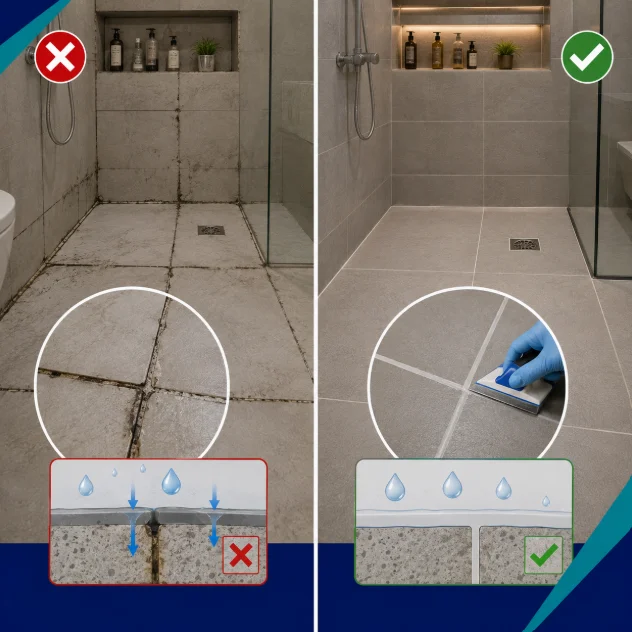
Grout lines that are too thin, uneven, or applied with low-quality material crack within months. Water then seeps through these cracks straight into the tile bed below.
The fix: Use epoxy grout instead of regular cement grout, especially for shower areas and floor joints. Epoxy grout resists water and stains far better and lasts many years longer.
Mistake 9: Not Planning for Future Maintenance
Some bathrooms are built so tightly that even changing a tap or fixing a flush tank becomes a two-day job involving broken tiles. This happens when concealed cisterns and pipe routes are planned without any thought for future repair.
The fix: Discuss with your plumber where valves, shut-off points, and cistern mechanisms will sit, and make sure at least one of them is reachable without breaking tiles.
Mistake 10: Bad Door and Threshold Design
A flat threshold with no raised edge lets bathroom water flow straight into the bedroom or hallway outside. This is a very common issue in older layouts and even in some new constructions where builders skip this small detail.
The fix: Keep a slightly raised threshold, around half an inch, at the bathroom entrance. It's a small design change that stops water from spreading outside the room.
Quick Reference: Mistakes and Fixes
| Mistake | Problem It Causes | Simple Fix |
|---|---|---|
| Skipping waterproofing | Leaks, damp ceiling below | Two coats + flood test |
| Wrong floor slope | Water pooling, weak tiles | Check slope with water test |
| Poor ventilation | Mould, bad smell | Exhaust fan vented outside |
| Cheap pipes | Leaks, cracks in years | Use CPVC/UPVC branded pipes |
| Bad electrical placement | Safety hazard | Keep 3 feet from water source |
| No access panel | Wall breaking for repairs | Add small access panel |
| Glossy floor tiles | Slippery, fall risk | Use matte, anti-skid tiles |
| Weak grout | Water seepage | Use epoxy grout |
| No maintenance access | Costly future repairs | Plan reachable shut-off valves |
| Flat threshold | Water spreads outside | Raised threshold edge |
Bathroom construction mistakes and fixes chart
Tips That Save Money and Stress Later
Always get the plumbing layout approved on paper before work starts. A simple hand-drawn plan showing pipe routes, drain points, and electrical points prevents most on-site confusion.
Never let tiling start before the flood test is done and passed. Once tiles are laid, checking for leaks becomes ten times harder and far more expensive.
Ask your contractor for the brand names of pipes, waterproofing chemicals, and grout they plan to use. Reputable brands may cost 10 to 15 percent more, but they cut future repair costs by half or more over ten years.
Keep a spare bucket of matching tiles from the same batch. Tile shades change between manufacturing batches, so if a tile cracks two years later, a new batch tile will not match.
Common Corrections During Mid-Construction Checks
If waterproofing looks thin or patchy, ask for a redo before the flood test, not after. A rushed second coat over a bad first coat still fails.
If the floor slope test shows dry patches, don't accept "it will settle later." Slope problems in concrete floors do not fix themselves once tiled.
If exhaust ducting was missed in the plan, add it before the false ceiling or wall finishing closes the gap. This is the last easy window to fix ventilation.
Final Thoughts
Bathroom construction mistakes are rarely visible on the first day. They show up months or years later, as leaks, smells, cracks, or slippery falls. The good news is that almost every mistake listed here has a simple, low-cost fix, if it's caught during construction rather than after.
Spend a little extra time checking waterproofing, slope, pipe quality, and tile choice before the room is sealed up. A bathroom built right the first time saves years of repair work, and far more money, than any shortcut taken during construction.